Sector
Norwegian Customs
Challenge
Develop a mobile solution for field-based customs workers to efficiently issue fines to drivers and streamline the process of locating them.
My Role
Insight and analysis, Concept development, Concept testing
Project Time
2 months
The Forenklet Forelegg project was initiated to create a digital solution aimed at reducing the administrative burden on Norwegian customs officers working in the field. This project focused on streamlining the process of issuing simplified fines (Forenklet Forelegg) to individuals or companies attempting to bring goods over the legal quota into Norway. The key objective was to improve how fines are issued, processed, and paid, leading to more efficient customs operations.
The project initially planned a four-day Google Design Sprint. The main goal was to develop a digital solution that simplified both the issuing and payment of simplified fines (Forenklet Forelegg). The envisioned solution would enable customs officers to issue fines more efficiently, while also allowing individuals to pay the fines immediately, thereby addressing the common issue of unpaid fines. The sprint would have helped develop and test a prototype to assess whether the concept could be realized and what improvements were needed. The goal of the planned sprint was to address both the time-consuming paperwork and the issue of unpaid fines by developing a solution that would digitize the process from start to finish.
During the insight phase, it became clear that issuing fines involved a lot of paperwork, which slowed down the process significantly. Calculating the fines accurately was also a challenge, as it required time and precision from customs personnel, often delaying their ability to complete their work efficiently.Even after issuing a fine, customs officers faced a new challenge—many people either ignored the fine or, quite literally, threw it out the window once they had left the checkpoint. This resulted in a high rate of unpaid fines, reducing the effectiveness of the entire process. Given these issues, the team recognized the need for a digital solution that would allow fines to be paid immediately on-site, providing a more seamless and accountable process for both the officers and the individuals being fined.
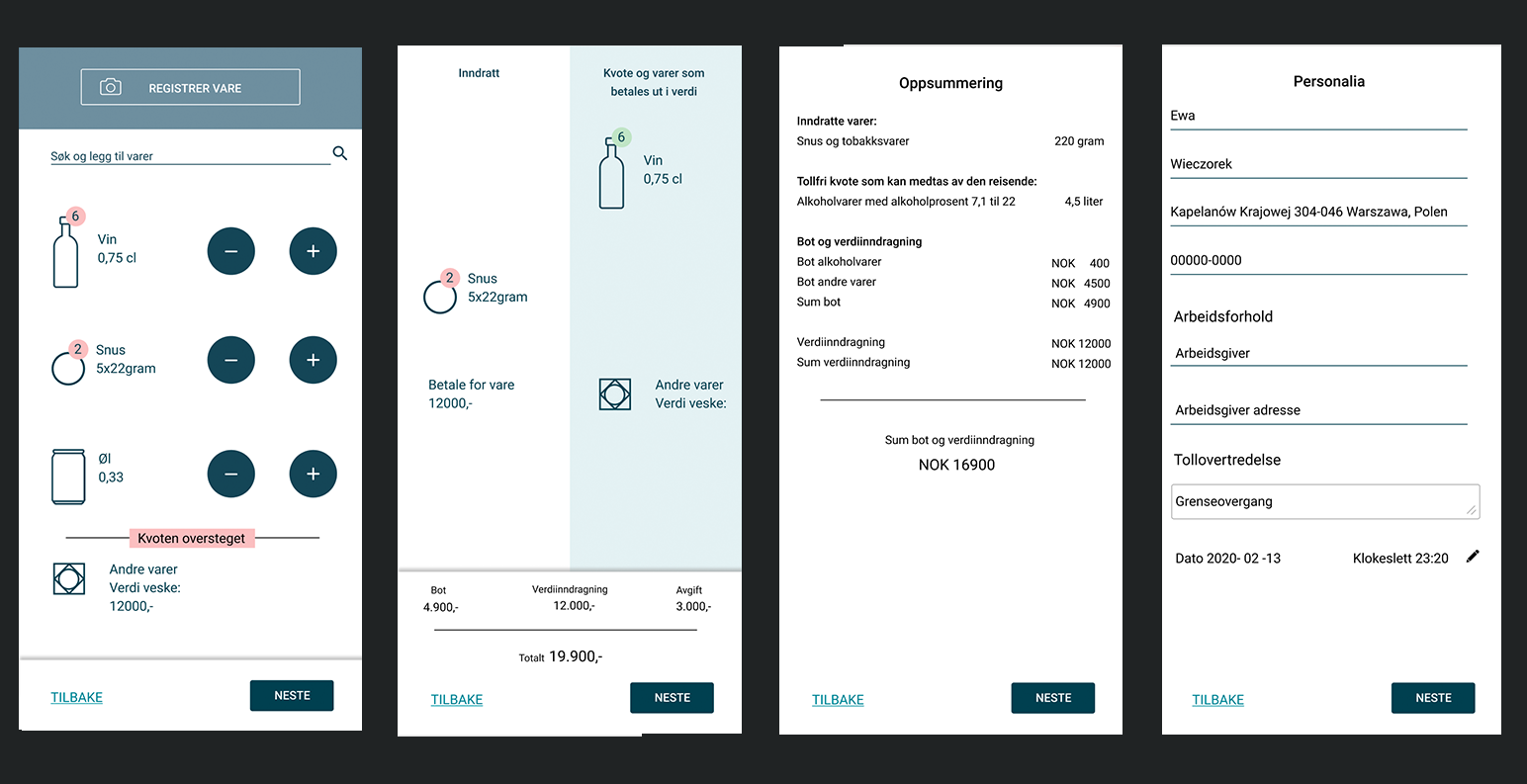
Streamlining the Process, Maintaining Familiarity In response to these challenges, the project developed a digital solution that mirrored the paper-based process customs officers were already familiar with. This was a key decision to ensure a smooth transition from paper to digital. The digital system retained almost the same steps as the manual process, allowing officers to recognize the flow and continue working efficiently without needing extensive retraining.
Simplified Workflow: The digital interface followed the same steps as the paper fine process, ensuring that customs officers could easily adapt to the new system. By mimicking the familiar flow, the transition was seamless, minimizing disruption to their day-to-day tasks.
Automated Fine Calculations: The system automated the complex task of calculating fines based on the specific goods and quotas, reducing the risk of errors and speeding up the process.
On-the-Spot Payments: A critical feature of the digital solution was the integration of immediate payment options. Individuals could pay their fines directly at the customs checkpoint using mobile payments or other payment methods, which drastically reduced the number of unpaid fines.
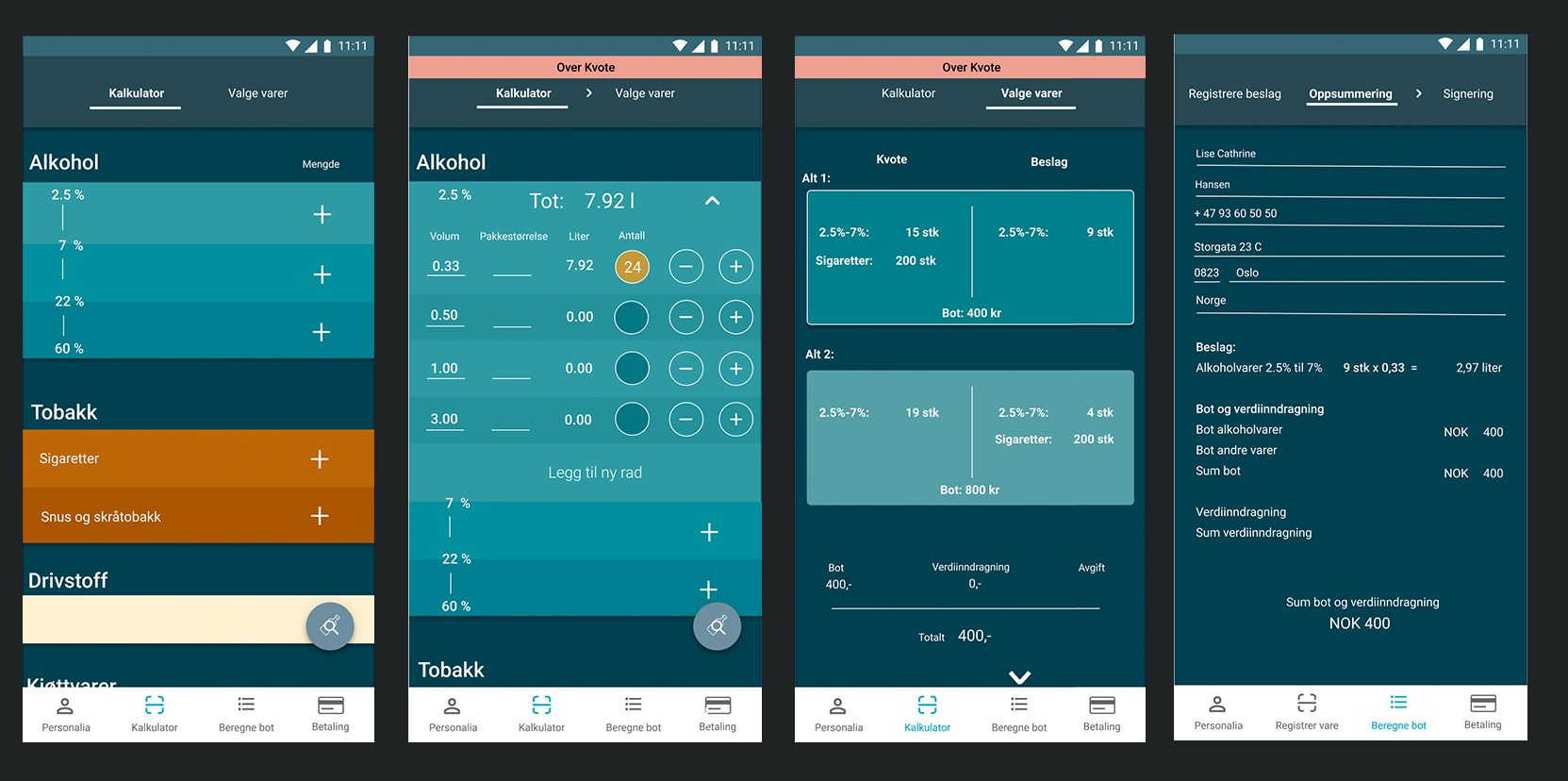
During the testing of the first prototype with customs personnel. They requested a more refined calculator with additional options, including the ability to input the quantity and alcohol percentage of beverages. They also suggested that the app should present travelers with alternative goods selections, making it easier for them to adjust their quotas. Additionally, many expressed a preference for a dark-themed version of the app, which would improve usability in different lighting conditions.